Japanese Remarks on Taiwan Spark Diplomatic Firestorm
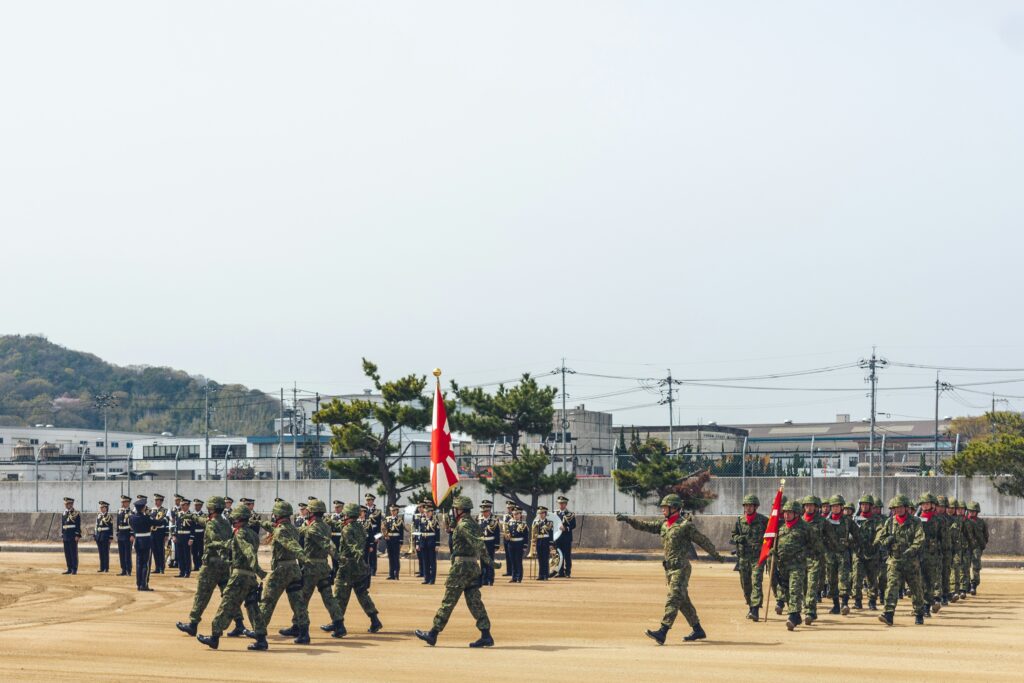
In a significant escalation of rhetoric, Japanese Prime Minister Sanae Takaichi recently suggested that Japan might consider military intervention in the event of a crisis over Taiwan. While Japan has long maintained a policy of collective self-defense under its U.S.-aligned security framework, such an explicit statement regarding Taiwan marks a notable shift in tone. The remarks were swiftly condemned by Chinese Foreign Minister Wang Yi, who labeled them a ‘grave violation of international law’ and accused Japan of ‘crossing a red line.’ Beijing emphasized that any foreign military involvement in what it views as an internal affair would constitute ‘aggression,’ potentially triggering a military response.
This diplomatic flare-up underscores the sensitivity of cross-strait relations and the broader strategic competition between China and U.S. allies in the Indo-Pacific. Although Takaichi’s comments did not outline specific operational plans or invoke formal defense commitments, their symbolic weight has been interpreted as a signal of deeper alignment with Washington’s strategic posture toward Taiwan. Analysts note that while Japan lacks the legal framework for unilateral military action, its growing defense budget and enhanced cooperation with NATO partners indicate a gradual shift toward greater regional assertiveness.
Military Escalation Risks Remain Limited but Rising
Despite the heated rhetoric, the likelihood of direct military conflict involving Japan remains low in the near term. Japan’s constitution restricts the use of force to cases of self-defense, and any deployment in defense of Taiwan would require complex legal amendments and political consensus. Moreover, such a move would almost certainly be coordinated with the United States under the bilateral security treaty. However, the mere suggestion of Japanese involvement increases the perception of risk among regional actors and could accelerate military posturing by China, including expanded air and naval exercises near Taiwan.
Recent data from the Center for Strategic and International Studies (CSIS) shows a 37% year-over-year increase in Chinese military sorties into Taiwan’s Air Defense Identification Zone (ADIZ) through the first half of 2024. Any further provocation—diplomatic or military—could prompt additional drills or coercive measures, such as economic sanctions against Japanese exports. That said, full-scale conflict remains unlikely due to mutual deterrence, deep economic interdependence, and the high costs associated with military escalation. Nonetheless, investors must monitor incremental shifts in defense posture, which can influence market sentiment even without overt hostilities.
Immediate Market Volatility Across Asia-Pacific
The geopolitical shockwave triggered immediate reactions across Asian financial markets. Within 24 hours of Takaichi’s remarks, the MSCI AC Asia ex-Japan Index fell 2.8%, while Japan’s Nikkei 225 declined 1.9%. Taiwanese semiconductor giant TSMC saw its stock drop 4.2% on the Taiwan Stock Exchange, reflecting investor concern over supply chain disruptions. South Korea’s KOSPI also retreated by 2.3%, weighed down by losses in export-oriented tech firms.
Currency markets showed clear risk-off behavior. The Japanese yen weakened to 158.7 per U.S. dollar—a six-month low—amid speculation of prolonged dovish monetary policy from the Bank of Japan. Meanwhile, the Taiwanese dollar depreciated 1.1% against the greenback. These moves reflect diminished confidence in regional stability and increased demand for external hedges. Notably, equity options on key Asian ETFs such as EWT (Taiwan) and EWY (South Korea) saw implied volatility surge above 25, indicating heightened hedging activity.
Safe-Haven Assets See Renewed Demand
As tensions flared, capital flowed into traditional safe-haven assets. Gold prices climbed to $2,340 per ounce, up 3.1% week-on-week, marking a new 2024 high. The U.S. dollar index (DXY) rose 1.4% to 106.2, supported by both geopolitical concerns and stronger-than-expected U.S. retail sales data. The Swiss franc also strengthened, appreciating 1.8% against the euro, signaling renewed demand for politically neutral currencies.
Bitcoin, increasingly viewed as a non-sovereign store of value, saw notable inflows. A major institutional strategy added $50 million in Bitcoin to its crypto reserves, according to blockchain intelligence firm DataHub. This move reflects growing institutional appetite for digital assets during periods of geopolitical uncertainty, though volatility remains elevated. Over the same period, Bitcoin surged from $61,000 to $67,800—a 11.1% gain—before partially retracing. While digital assets should not replace core hedges like gold or Treasuries, they are emerging as a supplementary tool in diversified portfolios.
Investment Strategy Amid Rising Geopolitical Risk
For investors with exposure to East Asian supply chains or regional equities, this episode highlights the importance of stress-testing portfolios against geopolitical scenarios. Sectors most vulnerable to disruption include semiconductors, electronics manufacturing, and maritime logistics—all heavily concentrated in Taiwan, South Korea, and parts of Southeast Asia. Consider reducing concentrated positions in single-country ETFs and reallocating toward diversified Asia-Pacific funds with lower Taiwan beta.
Hedging strategies should include allocations to safe-haven assets such as U.S. Treasury bonds (particularly short-duration TIPS), gold (via GLD or physical holdings), and defensive multinationals with global revenue diversification. Investors may also explore options overlays on regional ETFs to limit downside risk. It is critical to avoid overreaction; while tensions are real, historical precedent shows that markets often rebound after initial selloffs once rhetoric subsides. Maintain discipline, review geopolitical risk ratings regularly, and ensure portfolio resilience through diversification—not speculation.